Lecture #22: More Pointers
November 24, 1999
Bob Pitha
bpitha@cs.ucsd.edu
http://www-cse.ucsd.edu/classes/fa99/cse5a
remember…
• Pointers give us a way of referring directly to a location in memory
• We can declare a pointer variable:
int *p;
– but it doesn’t actually “point” to anything until we set its value to a real address
• We can find the address of a variable
– using the & operator
int i;
int *p = &i;
remember…
• We can operate on what a pointer points to
– using the * operator
int i;
int *p = &i;
*p = 3;
– this sets the value of i to 3
NULL
• There is a special value for pointers, named NULL
– this is the canonical “invalid” value
• it’s never a valid address
• it can be used to indicate when a pointer variable is not set to an address
• it’s useful for initializing pointer variables before you’ve actually set their value
• it’s used in a lot of other situations too, we’ll encounter some
– don’t confuse this with the nul character, which is the name for ASCII code 0
• also ‘\0’
pointers and function arguments
• When I introduced functions, I said that functions can have any number of inputs (arguments), and a single output (return value)
– I lied. Well, sort of…
how did I lie?
• In C, arguments are passed by value
– this means that when you specify an expression as an argument to a function call, the value of that expression is copied into the parameter in the function
• remember, a variable name is a simple expression
– so when we change the value of a function parameter, we’re changing a copy, and the change doesn’t affect the variable used to call the function
example
• Changes to parameters don’t “pass back”

but…
• What if the variable we pass into a function is a pointer?
– we still can’t change the parameter inside the function and expect the change to affect anything outside the function
– but we can change the thing the pointer points to
• and then when we return from the function, we can find the change at the same location
example

example – what’s going on here?
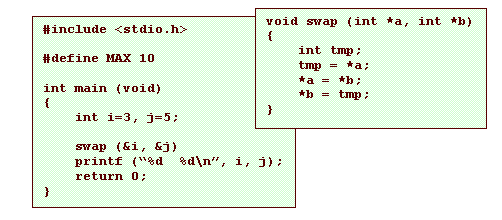
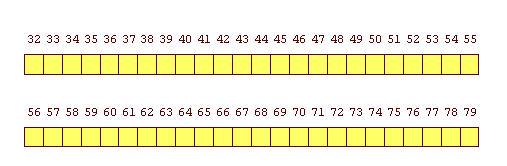
example – what’s going on here?
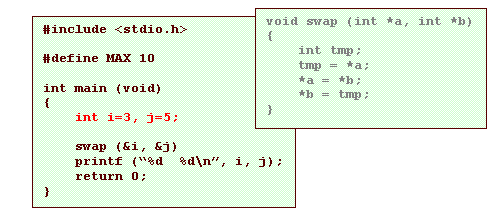
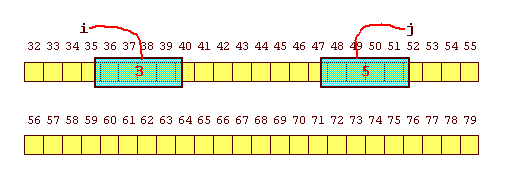
example – what’s going on here?
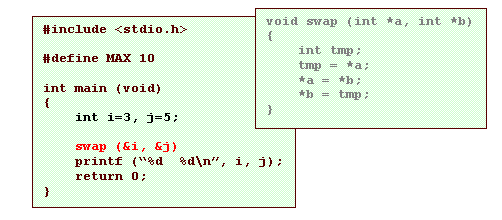
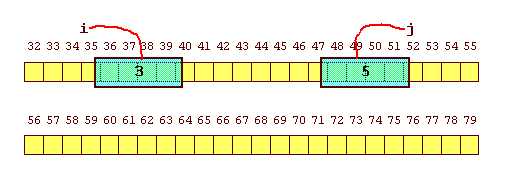
example – what’s going on here?
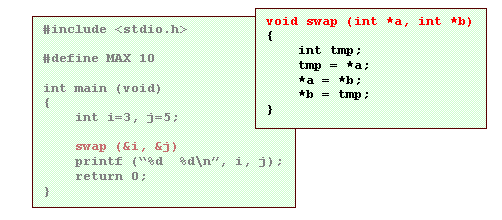
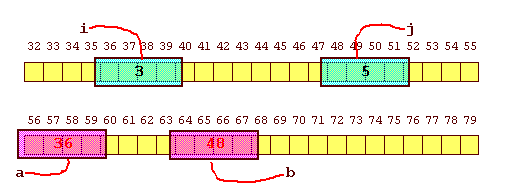
example – what’s going on here?
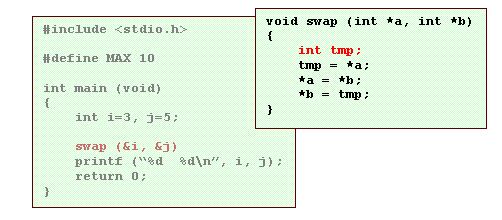
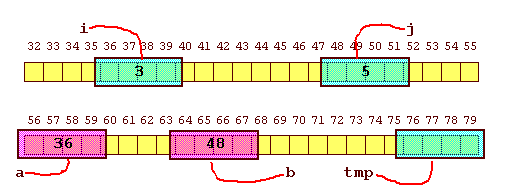
example – what’s going on here?
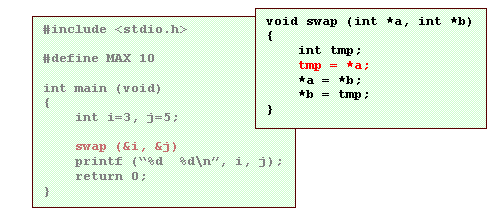
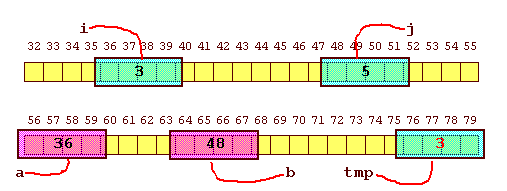
example – what’s going on here?
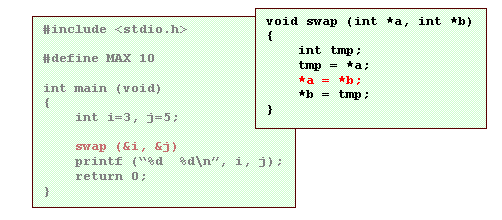
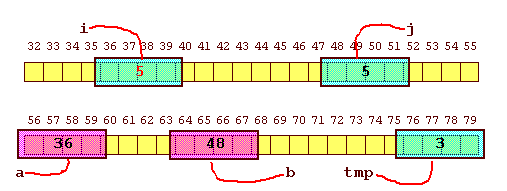
example – what’s going on here?
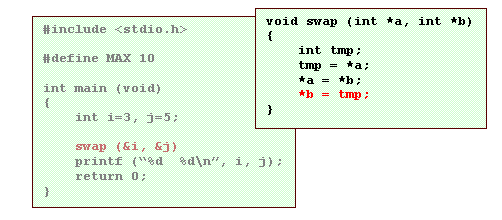
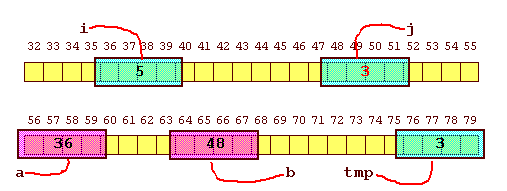
example – what’s going on here?
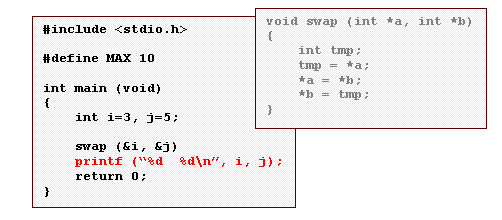
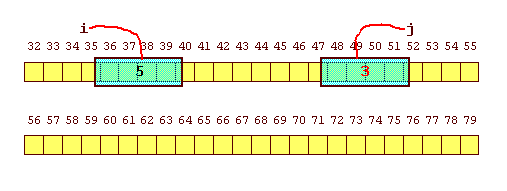
so what does all that mean?
• You can “return” more values from a function than just the return value
– by passing in pointers to other variables
– the function can then use the pointer to change the value of the variable
scope
• This circumvents the “scope” rules we talked about earlier
– remember that a variable’s scope determines where it can be seen from within the program
– so in our example, i and j were not in the scope of the function swap(), but we changed their values anyway
extent
• There is another variable concept called extent, that we haven’t really talked about
• Extent determines how long the variable exists while the program is running
– scope is a static property: it applies to the code
– extent is a dynamic property: it applies to the running program
• Extent and scope are often mixed together, but they’re really separate concepts
extent
• Let’s look at our swap function again
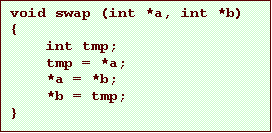
– notice that the variable tmp is declared at the beginning of this function
• thus, its scope is the entire body of the function
• and the scope rules say that we can only use the name tmp within the function
scope vs. extent
• But we just saw an example where we manipulated variable values from outside their scope
– so in that case, the variables still existed somewhere in memory
– scope says whether we can use the name, not whether the variable will exist or not
variable lifetime
• But each variable has a well-defined lifetime
– at some point, the computer sets aside the memory for that variable
• before that point, the variable doesn’t exist
– at some later point, the compter frees the memory for that variable, so it can be used for something else
• after that point, the variable doesn’t exist either
• and if we still have a pointer to that memory, it’s no longer valid
• to use that locker analogy, it would be like someone still having a slip of paper with my locker number on it, even though I’ve graduated and my locker’s been given to someone else
variable extent
• The lifetime of the variable is its extent
– most of the variables we’ve seen and used so far have automatic extent
• that means they’re created and destroyed automatically, as needed
• each type of scope has its own extent rules
• and we can manually affect the extent of some variables
swap() again
•
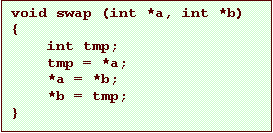
In swap(),
we declare the variable tmp
– and it’s a definition: it reserves some memory
– but up to now, we haven’t looked at when that memory is reserved, and when it’s released.
extent of tmp
• The extent of tmp in this case pretty much mirrors its scope
– it’s created when we enter the function
– it’s destroyed when we leave the function
– that means that every time we call the function, the expression &tmp may have a different value
extent of i and j
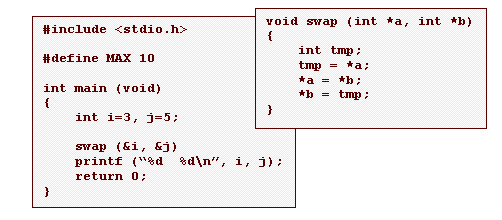
• Similarly, i and j exist from the beginning of the block in which they’re declared until we leave it
– which is really from the beginning of the program until it ends
– so they exist while swap() is being called
so what?
• Why do we care about extent?
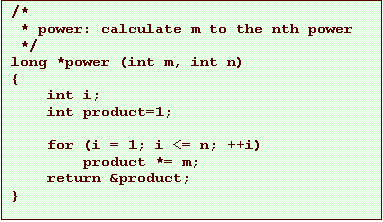
– What if we did something like this?
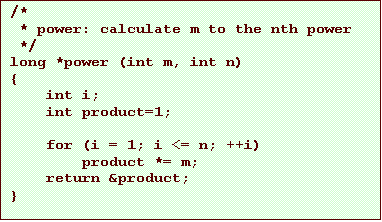
returning a pointer