Lecture #21: Pointers
November 22, 1999
Bob Pitha
bpitha@cs.ucsd.edu
http://www-cse.ucsd.edu/classes/fa99/cse5a
the nature of memory
• Way back, we talked about computer memory
– it’s a bunch of bytes
– each byte can hold 256 values
– “adjacent” bytes can be combined to hold larger values
• usually grouped in powers of 2 (2, 4, 8, 16, …)
• What’s “adjacent” mean?
– bytes in memory are numbered sequentially
sequential numbering
• So memory is a long sequence of storage spaces for numbers
– like a long line of lockers
– each locker is given a number
– C lets us use that number…
addresses
• In C, we call these “locker numbers” addresses
– an address is the number of the byte we want
• or if we’re talking about a grouped byte, it’s the first byte of the group
• When a variable contains an address, we call it a pointer
– because it “points” to some other data in memory
it’s like a treasure hunt…
• Up to now, we’ve dealt only with straightforward variables
– they hold the data we care about
– just like a locker holding something for me
• I can put my book in my locker and get it again later
• Pointers introduce a level of indirection
– instead of holding the data, they hold information about where to find the data
– so now my locker would only hold a piece of paper, telling me which locker to look in for my book
what’s the point?
• Indirection can be helpful
– when the actual data location may change
• Analogy: the cs5a@ieng9.ucsd.edu e-mail address
– mail sent to this address goes to me
– but next term, if someone else is teaching CSE 5a, it will go to that person
just more numbers
• Like every other kind of data we use, addresses are numbers
– up to now, though, our data has been numbers we care about
• temperatures
• dates
• results of calculations
– addresses are numbers too, but ones that only are useful to the program while it’s running
data types
• A pointer isn’t a new data type
– it’s just kind of a modification, because the pointer should point to a data type
• or another pointer, that must eventually find a data type
declaring a pointer
• We declare a pointer using a *
– this declaration creates a variable named ptr

• ptr is a variable whose value is an address
• the thing we expect to find at that address is an int
• since an int is 4 bytes (on our computers, at least), this is the address of the first byte of a group of 4 bytes
– but ptr has not yet had its value set, so it does not yet contain a valid address of anything
the address-of (&) operator
• The unary operator & is used to find an object’s address
– that is, its operand is an object
• remember that an object is something with memory associated with it
– the value of the expression (operator and operand) is the address in memory of the operand
example
• So, let’s put this all together:
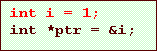
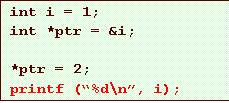
– the first line defines a variable named i
• it is an int, and thus has 4 bytes of memory reserved for it
• its value is set to 1

example
• So, let’s put this all together:
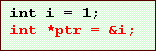
– the second line defines a variable named ptr
• it is a pointer to an int
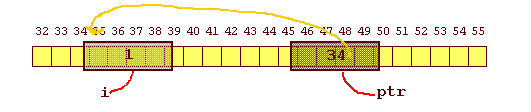
• it is initialized to the address of i
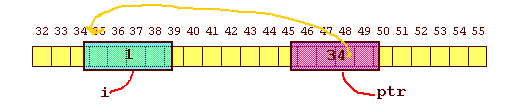
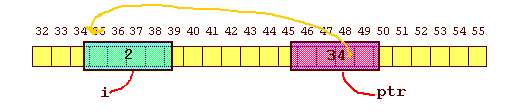
– thus, it contains a number which is an address
– if you look at the 4 bytes starting at that address, you will find the value 1
the contents-of (*) operator
• The unary operator * is used to access whatever is at a given address
– its operand is an address
– the value of the expression is an lvalue
• remember that an lvalue is an expression that refers to an object
• and an object is something with memory associated with it
• an address is supposed to refer to a location in memory
• so an expression using the * operator refers to an object, and thus is an lvalue
– that means we can assign its value as well as look at it
example
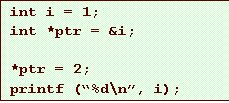
• What does this print?
example
• What does this print?
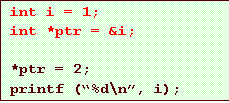
– we know the first two lines create the variables i and ptr
• i is an int, containing the value 1
• ptr is a pointer, containing the address of i
example
• What does this print?
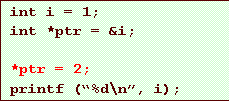
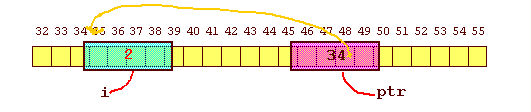
– *ptr refers to the thing that ptr points to
– ptr points to the memory that stores the value of i
– so this line assigns the value 2 to i
example
• What does this print?
– it just prints the value of i
– which is now 2
confusion
• This is going to be confusing for a while
• We have 2 values now:
– the value of the pointer
• which determines what the pointer points to
– and the value in the location the pointer points to
confusion
• We can change the value of the pointer:
example
• What does this do?
example
• What does this do?
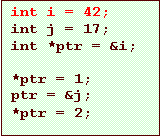
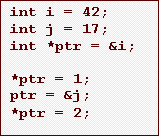
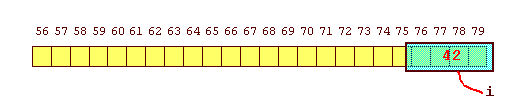
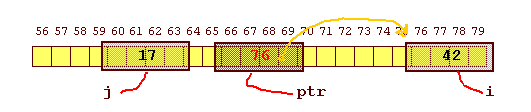
– this declaration creates the variable i
• i is an int, containing the value 42
example
• What does this do?
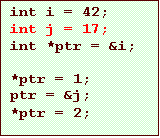
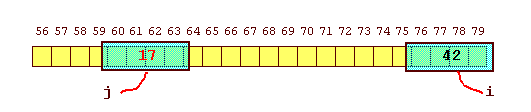
– this declaration creates the variable j
• j is an int, containing the value 17
example
• What does this do?
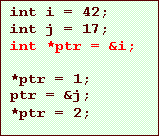
– this declaration creates the variable ptr
• ptr is a pointer
• initially, it points to i
example
• What does this do?
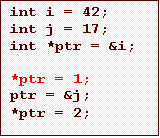
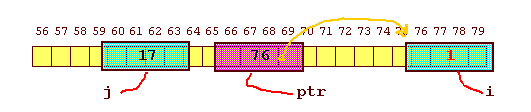
– this statement assigns the value 1 to whatever ptr points to
• which, as we already know, is i
example
• What does this do?
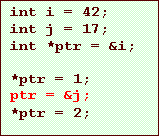
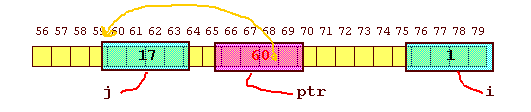
– this statement reassigns the value of ptr
• so it now points to j instead of i
example
• What does this do?
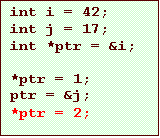
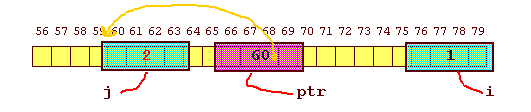
– and finally, we assign the value 2 to whatever ptr points to
• which is now j
operations on pointers
• What we’ve seen so far:
– assignment (=)
– dereferencing (*)
– address (&)
pointer assignment
• As with arithmetic assignment:
– the object on the left side must be an lvalue
– therefore, this is not valid:

•
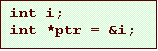
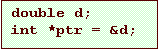
Both operands must be pointers to the same data type
– valid:
– invalid
pointer dereferencing
• Single operand, must be a pointer
• The data type of the expression is the data type of whatever the pointer points to
– thus, given this declaration,