Lecture #19: Programming Style
November 16, 1999
Bob Pitha
bpitha@cs.ucsd.edu
http://www-cse.ucsd.edu/classes/fa99/cse5a
writing good programs
• There are many different qualities that define a “good” program
– it does what it’s supposed to
– it doesn’t crash
– it’s easy to use
– it’s fast and efficient
– it comes in a neat box
– it’s easy to maintain
– it’s easy to understand
writing good programs
• There are many different qualities that define a “good” program
– it does what it’s supposed to
– it doesn’t crash
– it’s easy to use
– it’s fast and efficient
– it comes in a neat box
– it’s easy to maintain
– it’s easy to understand
working vs. good
• You can write a program that works and is still not very good
– as you probably know by now, programming isn’t always easy
– it’s often not worth writing a program if you’ll only use it once
• so you will usually want to keep the program, and use it more than once
• you may need to fix bugs
• or add new features
• or give it to someone else to do those things to it
ugly code
• If you write ugly, unreadable code, nobody will be able to read it (nor will they want to)
– if you need to fix a bug, it can seriously affect how easy it is to find and fix
– if someone else looks at your code, they may make fun of you
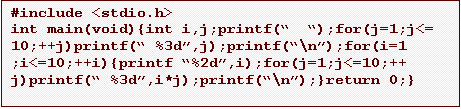
example: bad code
example: silly code
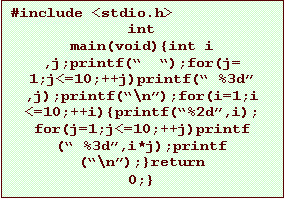
why these are bad
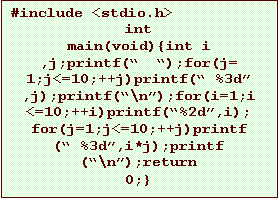
• Here’s a broken version of the last one.
– It might take a long time to find the error
what goes into a good program
• It’s readable
• It’s easily maintained
• It’s logically laid out
analogy to writing
• When you write something (say, a story or an article) you try to write well
– you want your readers to understand your point
– in fact, a good writer will write in ways that help make the point
• sentence length
• paragraph length
• word choice
• grammar
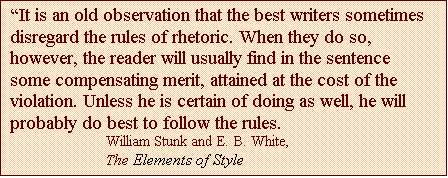
relevant quote
what are elements of programming style?
• Naming
• Formatting
• Consistency
• Magic numbers
• Comments
Naming
what’s in a name?
• Labels something
– variable
– function
– other things we haven’t talked about yet
• Tells you its purpose
name qualities
• A good name should be:
– informative – it should tell you something
– concise – no longer than necessary
– memorable – you should remember what it is
– pronounceable – most people subvocalize
what are the issues?
• When you look at a declaration
– you should be able to guess what the variable is
– how it will be used
– supplemented by comments
• When you look at the code
– you shouldn’t have to keep referring back to the declaration
– the name should remind the user of the meaning
informative
• Depends on how close the usage will be to the declaration
– if it’s used very near the declaration, it’s not as important that the name carry as much information
– if the use and declaration are far apart, you want the name to be as informative as possible
• Examples:
– numberOfPoints vs. npoints
– elementIndex vs. index vs. i
concise
• Really long names are a pain
– lines get long and unwieldy
– numberOfItemsInList vs. listSize
• This gets tied up with the informative part
– more informative usually means longer
– try to avoid unnecessary length
memorable
• If all your names are similar, it doesn’t matter how informative they are
– the reader will still mix them up
– like reading a novel where there are 3 characters named “John”
pronounceable
• This seems silly, but unpronounceable names can really interfere with readability
• Don’t use weird abbreviations
– smrhshscrtch
– acimam
– rngcmf
– frnhtTmp
general idioms
• Active names for functions
– getTime()
– printTable()
– validateCoords()
• Nouns for variables
– numVertices
– capacity
accuracy
• If you change the code, be sure to change the names if necessary
– occasional inaccuracy is worse than generally meaningless names
Formatting
formatting?
• Good formatting can make a huge difference
– use spaces carefully
– indent lines to show structure
– use parentheses to resolve ambiguity
spaces
• In many cases, the compiler ignores spaces and tabs
– but the human eye is very se nsitive to spacing and distance
– things run together if there are no spaces
![Text Box: for(n=0;field[n]!=‘\0’;n++)](./Lecture19_files/image005.gif)
![Text Box: for (n=0; field[n] != ‘\0’; n++)](./Lecture19_files/image006.gif)
indenting
• We’ve already discussed this a little
• Indenting statement blocks can really help show your program’s structure
example

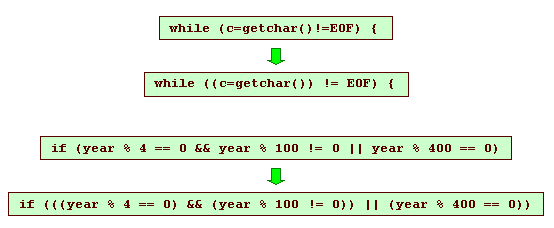
parenthesize
• The operator precedence and associativity rules remove ambiguity for the compiler
– but that doesn’t mean it’s always crystal-clear for the reader!
don’t get too clever
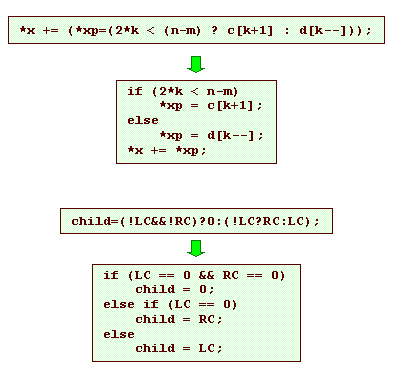
• Some things are perfectly legal C but don’t make programs readable at all