Lecture #17: Functions 2
November 10, 1999
Bob Pitha
bpitha@cs.ucsd.edu
http://www-cse.ucsd.edu/classes/fa99/cse5a
let’s review functions
• A function is like a small program within the program
• You pass data into the function via its arguments
• You get data back from the function via its return value
• You call the function using a function call expression
function example

function example – arguments
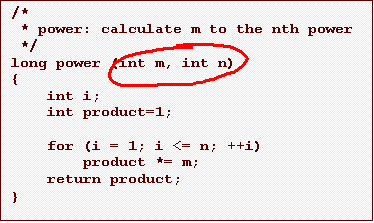
arguments
• The functions argument define variables for the function
– these variables are only available from inside the function
– their values are set to whatever values are “passed in” when the function is called
– these are copies of the values that are passed. Changing the value of an argument does not change the value of the variable whose value was passed in
function example – return value

return value
• The function can return a single value
– its data type is defined as part of the function declaration
– if the function is declared as returning a value, it must return a value
– if
you don’t want to return a value, the return type should be void
function call expression
• You invoke a function when the computer evaluates a function call expression
– function name followed by arguments in parentheses
– commas separate multiple arguments
– if no arguments, just empty parentheses
let’s look at an example

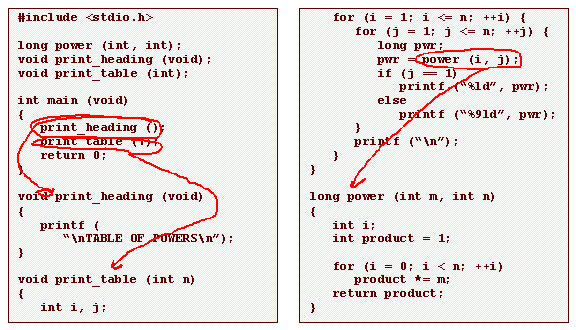
example

Function 1: main()
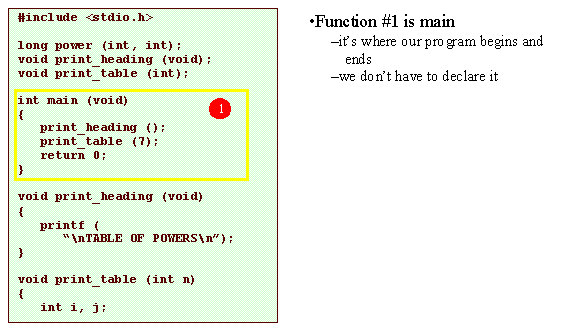
Function 2: print_heading()

Function 3: print_table()

Function 4: power()

function declaration issues
• We must declare a function before we can call it
– we can use a function prototype
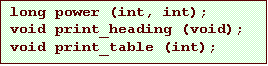
– or we can use the function definition as a declaration
• but only so long as the definition comes before the call
• so in our example, we used prototypes because our function definitions came after the function calls
example
function definition order
• But if we had introduced the functions in a different order, we wouldn’t need to use prototypes
– because the definition also declares the function
example (rearranged)

prototype issues
• There are some issues here…
– this can be harder to read
• since main now comes at the end
• it’s kind of Reverse Polish Notation for programs
– it only works within a single file
• we’ve only seen programs that fit in a single file
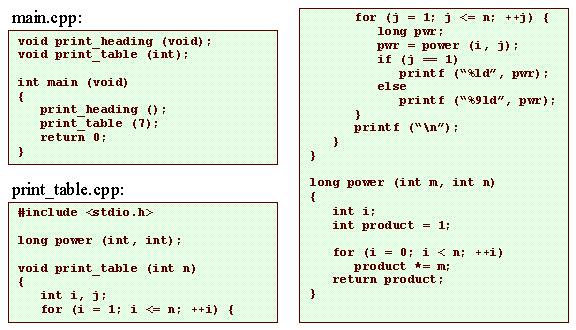
• but we can use multiple .cpp files to write our program
• every function must be defined in a single file
• but each function could be in a different file
example
variable declarations
• We can now revisit variable declarations, and discuss some issues we passed over the first time
variable concepts
• scope
• visibility
• extent
scope
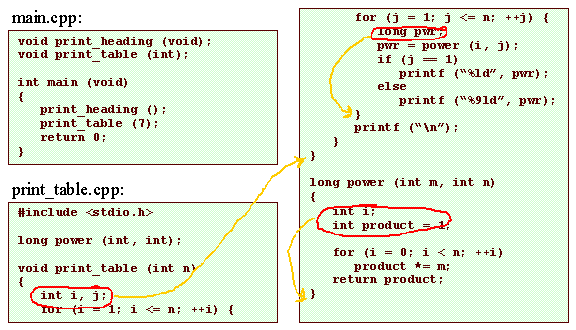
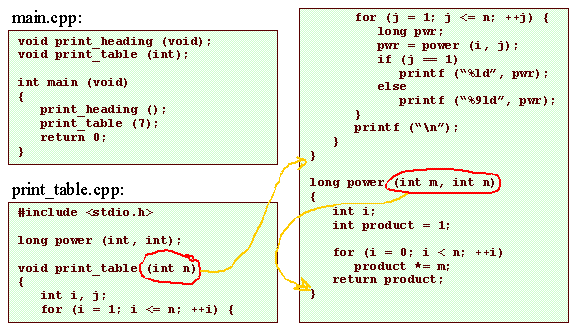
• The region of the program code in which declaration has effect
– Local variables: declaration through to end of block
– Global variables: declaration through to end of file
– Parameters: through to end of function
what does this mean?
• It means that when you declare a variable, it doesn’t mean the variable is available everywhere
example – local scope
example – parameter scope
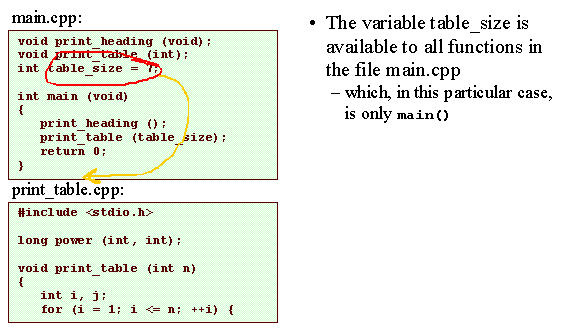
example – global scope