|
Professor Michael B. Taylor Center for Dark Silicon Bespoke Silicon Group Paul Allen School of Computer Science and Engineering Dept of Electrical Engineering University of Washington, Seattle
|

| Research Team | Teaching | Service | Programming Team |
NEWSFLASH:
I am recruiting heavily for both graduate students and postdocs for my team at UW.
Interested PhD/MS students and Postdocs should apply to either or both departments and drop me a note (2 chances, 1 great advisor!)
Bio
I have been a professor in the Paul Allen School of Computer Science and Engineering and Dept. of Electrical Engineering at the University of Washington, Seattle since September 2017. I was a Visiting Research Scientist at Google and YouTube, working on datacenter accelerators, and before that I was a tenured professor at the University of California San Diego Computer Science and Engineering Department from 2005 to 2016.I received a PhD in Electrical Engineering and Computer Science from MIT, and my research centers around computer architecture but spans the stack from VLSI to compilers. I was lead architect of the 16-core MIT Raw tiled multicore processor, one of the earliest multicore processors, which was commercialized into the Tilera TILE64 architecture. Recently, in 2017, Intel Skylake SP has adopted our scalable mesh of cores architecture that we proposed. I co-authored the earliest published architecture research on dark silicon, the result of the end of Dennard scaling, including a paper that derives the utilization wall that causes dark silicon, and in that paper proposed specialization as the primary way this probably would be attacked. To demonstrate these ideas, we proposed a prototype massively specialized processor called GreenDroid, and in that work claimed that the future chips would start incorporating exponentially growing numbers of accelerators, a hypothesis which has come true for Apple iPhone chips, as shown in this innovative study by David Brooks's team at Harvard. I also wrote a paper that establishes the definitive taxonomy, the Four Horsemen, for the semiconductor industry's approaches to dealing with the problem, and a follow-on paper on the Landscape of the Dark Silicon Design Regime. My research on dark silicon fed into the ITRS 2008 report that led Mike Mueller of ARM to coin the term "dark silicon". More recently, I wrote the first academic paper on Bitcoin mining chips and in this paper proposed that this was evidence of a totally new model for chip development: rather than the old model of traditional chip companies figuring and selling general-purpose compute chips that were targeted to a wide audience and not specific to a particular application domain; we would have "a new age of hardware innovation tailored to emerging application domains—an Age of Bespoke Silicon". Effectively their former customers would drive the creation of "bespoke silicon chips" for their specific application needs.
This prediction has since come true; every hyperscale datacenter company (i.e. Facebook, Alibaba, Google, Microsoft, ...) has their own domain specific chips under development. Immediately after that paper, from 2013-2016, we worked on the concept of ASIC Clouds. In 2016, my team published the first paper on ASIC Clouds. We make the case that datacenters full of ASICs are in our near future, and show a prototypical ASIC Cloud architecture, how they should be designed, and how they save TCO. We proposed neural network ASIC Clouds before Google announced their TPU, and also proposed the use of video transcoding clouds for YouTube, an approach which Google adopted subsequent to the publication of our paper and disclosed in ASPLOS 2021. This paper has a nice overview and retrospective of the work Communications of the ACM ASIC Cloud paper. This paper was also selected to be a ACM Research Highlight; on average only two papers per year out of all of computer architecture publications in the world!
In 2017, we published the first architecture paper on NRE, non-recurring engineering expense. We show how minimizing NRE can be more important for ASIC Cloud feasibility than optimizing accelerator speedup or energy efficiency. We present the first ever architect's model for NRE, using current industry parameters (paper) (youtube talk), and opening up a new area of research. With the rise of specialization and the end of Moore's law, driving down the cost of design will surely be an important driver of future research.
Also in 2017, we designed the architecture and wrote the RTL for the open source 511-core RISC-V compatible Celerity chip, and together with Michigan taped it out in TSMC 16nm technology. The chip broke the world record for all silicon chips on the planet for Coremark performance and also beat the world record for single-chip RISC-V chip performance by over 100X.
Returning the favor for Michigan, we taped out and brought up the Michigan OuterSpace sparse matrix chip, in TSMC 40nm technology.
More recently, at UW my team taped out and brought up two complex Global Foundries 12nm chips -- on the same day! This is unprecedented for a university.
One is for the DARPA POSH BlackParrot RISC-V multicore project.
The other is for the DARPA SDH-funded HammerBlade RISC-V GP-GPU project.
Both designs are fully open source.
I occasionally help companies and other legal professionals evaluate their patent portfolios, and provide advice to companies leveraging the Tilera TILE64 architecture, or that are developing cryptocurrency hardware. I have broad expertise in hardware and software, and on the Bitcoin cryptocurrency. My research is funded primarily by the National Science Foundation (NSF), including the Secure and Trustworthy Cyberspace Program, and DARPA/SRC's C-FAR and ADA centers.
Between the gaps at school, I worked on Apple's NuKernel microkernel, and co-wrote the first version of Connectix Virtual PC, an x86-to-PowerPC dynamic translation engine, which was acquired by Microsoft. I also contributed to the ChipWrights Visual Signal Processor in its earliest stages.
I received the NSF CAREER Award in 2009 and tenure in 2012.
My research sponsors:

| 
| 
|

| 
| 
|

| 
|
UW Center for Dark Silicon
I direct the UW Center for Dark Silicon and the Bespoke Silicon Group.
My colleagues and I were among the first to demonstrate the existence of a utilization wall which says that with the progression of Moore's Law, the percentage of a chip that we can actively use within a chip's power budget is dropping exponentially! The remaining silicon that must be left unpowered is now referred to as Dark Silicon.
Our research on Conservation Cores and GreenDroid proposes new architectures that exploit dark silicon. Our paper on the The Four Horsemen (slides) overviews the landscape of architectural approaches to addressing dark silicon. In addition to researching architectures for dark silicon, I look more broadly at sources of under-utilization in current day chips, spanning from a) power limitations because of poor CMOS scaling, b) overly large software engineering costs for parallelizing programs for multicore chips, and c) lack of parallel application domains.
My research attacks each of these problems by 1) reinventing processor design to make use of dark silicon, 2) utilizing existing cores better through better parallel software engineering tools and 3) finding new parallel application classes to put cores to work:
|

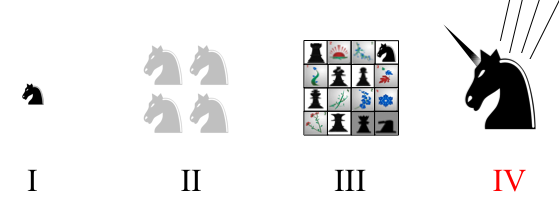


Greatest Hits (Click to view all publications)
|
Recent News
| May 2023 | An GeekWire article on some of Prof. Taylor's CHIPS Act fund raising activities. | ||||||||||||||||||||||||||||||||||||||||||||||||||||||||||||||||||||||||||||||||||||||||||||||||||||||||||||||||||||||||||||||||||||||||||||
| April 2020 | Coindesk writes an article leveraging the graphs from my Bitcoin mining evolution paper. | ||||||||||||||||||||||||||||||||||||||||||||||||||||||||||||||||||||||||||||||||||||||||||||||||||||||||||||||||||||||||||||||||||||||||||||
| April 2020 | Closing quote in this Communications of the ACM article on RISC-V: Says Michael Taylor, an associate professor in the School of Computer Science and Engineering at the University of Washington in Seattle, "There are no serious technical or practical issues with RISC-V. It will eventually supplant x86 and ARM as the primary instruction set for microprocessors. It will fundamentally change the computing world." | ||||||||||||||||||||||||||||||||||||||||||||||||||||||||||||||||||||||||||||||||||||||||||||||||||||||||||||||||||||||||||||||||||||||||||||
| July 2019 | Twin tapeouts in 12nm of the BlackParrot RISCV multicore chip and also the HammerBlade ML/Graph supercomputer chip! I think it's safe to say that no other university research group in the world has taped out two 12nm chips in a single day, and especially not of this complexity! ;-) | ||||||||||||||||||||||||||||||||||||||||||||||||||||||||||||||||||||||||||||||||||||||||||||||||||||||||||||||||||||||||||||||||||||||||||||
| May 2018 | Released first version of Luis Vega's excellent Amazon F1 Accelerator Tutorial. | ||||||||||||||||||||||||||||||||||||||||||||||||||||||||||||||||||||||||||||||||||||||||||||||||||||||||||||||||||||||||||||||||||||||||||||
| Mar 2018 | Received a Google Faculty Research Award! link. | ||||||||||||||||||||||||||||||||||||||||||||||||||||||||||||||||||||||||||||||||||||||||||||||||||||||||||||||||||||||||||||||||||||||||||||
| Feb 2018 | Quoted in Bloomberg! link. | ||||||||||||||||||||||||||||||||||||||||||||||||||||||||||||||||||||||||||||||||||||||||||||||||||||||||||||||||||||||||||||||||||||||||||||
| Feb 2018 | Received an Albaba AIR Research Award! link. | ||||||||||||||||||||||||||||||||||||||||||||||||||||||||||||||||||||||||||||||||||||||||||||||||||||||||||||||||||||||||||||||||||||||||||||
| Dec 2017 | Interviewed by Wired for this article on Global Bitcoin mining energy usage. | ||||||||||||||||||||||||||||||||||||||||||||||||||||||||||||||||||||||||||||||||||||||||||||||||||||||||||||||||||||||||||||||||||||||||||||
| Aug 2017 | Interviewed in this article about Bitmain (the primary Chinese bitcoin mining chip company) moving into ML datacenter chips, an act foreshadowed by our work on ASIC Clouds. | ||||||||||||||||||||||||||||||||||||||||||||||||||||||||||||||||||||||||||||||||||||||||||||||||||||||||||||||||||||||||||||||||||||||||||||
| Apr 2017 | We taped out Celerity, a fully open source RISC-V chip with neural network accelerator that contains 511 RISC-V cores, in 16 nm TSMC technology. UCSD, Cornell and Michigan teamed together on this ambitious project and we completed the entire design and tapeout in less than a year. The architecture of this chip was published at Hotchips 2017, and was jointly presented by one student each from Cornell, Michigan, and my team, the Bespoke Silicon Group. | ||||||||||||||||||||||||||||||||||||||||||||||||||||||||||||||||||||||||||||||||||||||||||||||||||||||||||||||||||||||||||||||||||||||||||||
| Mar 2017 | Check out my guest sigarch blog post on the Geocomputer Computer and the Commercial Borg. This is the lead article in a series of post by top computer architects across the planet! Local copy: pdf. | ||||||||||||||||||||||||||||||||||||||||||||||||||||||||||||||||||||||||||||||||||||||||||||||||||||||||||||||||||||||||||||||||||||||||||||
| Jan 2017 | Sabbatical at Google in their datacenter accelerator group (until September)! | ||||||||||||||||||||||||||||||||||||||||||||||||||||||||||||||||||||||||||||||||||||||||||||||||||||||||||||||||||||||||||||||||||||||||||||
| Dec 2016 | Our second ASIC tapeout, a ten-core manycore RISC-V processor, sent to the fab on Dec 22!
| Dec 2016 | Our ASIC Cloud ISCA paper was accepted as an IEEE Micro Top Pick. This means it was one of the 12 best computer architecture papers out of the hundreds published in 2016!
| Nov 2016 | Gave a talk at the fifth RISC-V workshop on some of our open source activities.
| Nov 2016 | Our ASPLOS paper was accepted. Congrats Moein, Lu, and Luis!
| Oct 2016 | Our first ASIC tapeout, a high speed communications interface chip, sent to the fab!
| Jun 2016 | ASIC Cloud paper is out at ISCA. This paper is as big of a deal as our groundbreaking 2010 ASPLOS paper | that showed the utilization wall that causes dark silicon, and proposed specialization as the solution. We show how datacenters full of ASIC accelerators are the next step for computer architecture, and show the entire TCO analysis, and a prototypical architecture and methodology for designing 4 kinds of ASIC clouds. Aug 2016 | Invited Talk at DARPA / MTO CHIPS Workshop!
| Jun 2016 | See my talk, on open source hardware at the Architecture 2030 workshop. (slides).
| May 2016 | Tech report on ASIC Cloud released.
| Jan 2016 | NSF has funded our $3M proposal, joint with Rosario Gennaro (CUNY), Abhi Shelat (UVa), Siddhartha Garg (NYU), Mariana Raykova (Yale), and my group (Bespoke Silicon Group). This is exciting!
| Sept 2015 | Presented CortexSuite to DARPA StarNet SONIC center at UIUC!
| Sept 2015 | Official release of Kremlin is finally out thanks to Prof. Sat Garcia!!
| Apr 29 2015 | Final interview about possibilities for dark silicon in this article.
| Apr 14 2015 | Interview about Dark Servers in this article in Semiconductor Engineering.
| Apr 9 2015 | One on one interview about Dark Silicon in this article in Semiconductor Engineering.
| Feb 2015 | MBT serves as General Chair of HPCA 2015!
| Feb 2015 | Quoted discussing 14nm in this article in Semiconductor Engineering.
| Jan 2015 | Our work on Dark Silicon and GreenDroid is extensively
discussed in this article at Semiconductor Engineering.
| Nov 2014 | My work on Bitcoin referenced in this coindesk article on Moore's Law.
| Sep 2014 | More of my work related to Bitcoin references in this coindesk article on immersion cooling with a few quotes from me.
| June 2014 | My views on a DAC panel quoted and discussed in Brian Fuller's article in semiengineering.com on challenges for Computer Vision chips.
| June 2014 | Interviewed in this article in Bitcoin magazine.
| May 2014 | Article in Korn Ferry Institute featuring my CASES paper.
| May 2014 | This work on state attacks on Bitcoin employs the models in my 2013 CASES paper on Bitcoin mining.
| Mar 2014 | My Bitcoin mining paper work referenced in Electronic Cooling Magazine.
| Mar 2014 | See my E3S Talk, entitled "A Landscape of the New Dark Silicon Regime". I gave a similar talk at DATE 2014 in Dresden, Germany. | Here is some press in the EE Journal Blog. Jan 2014 | Article in Data Center Knowledge discussing my Bitcoin CASES paper.
| Dec 2013 | I helped a reporter from the New York Times, Nathaniel Popper, as he deliberated on whether to fly to Iceland to meet a stranger and view their installation! He put together this great story on recent developments in Bitcoin mining. (I am quoted a few times.) | Also quoted in a Venture Beat article. Oct 2013 | Because of some of my Bitcoin knowledge, a few newspapers, radio shows, and a TV show interviewed me about Bitcoin, Tor and the Silk Road takedown:
|
Sep 2013 | I helped a reporter from the Wall Street Journal put together this front page article on Bitcoin mining.
| Sep 2013 | New CASES paper, Bitcoin and the Age of Bespoke Silicon.
| Sep 2013 | New IEEE Micro paper, A Landscape of the New Dark Silicon Design Regime.
| May 2013 | |
Jan 2013 | |
June 2012 | I presented my paper
Is Dark Silicon Useful? | Harnessing the Four Horsemen of the Coming Dark Silicon Apocalypse (slides) at DAC 2012 and DaSi 2012. November 2012 | Quoted in this article in the November 2012 IEEE Computer Magazine on Exascale computing.
| May 2012 | Quoted right at the beginning of this May 2012 IEEE Computer Magazine Article on Dark Silicon, right after Bill Dally! GreenDroid and Conservation Cores get a big shout-out for being a key approach for attacking the Dark Silicon problem.
| March 2011 | GreenDroid IEEE Micro article, The GreenDroid Mobile Application Processor: An Architecture for Silicon's Dark Future now available!
| Nov 2010 | UCSD ACM Programming Team, which I coach, invited to Worlds in Egypt!
| Aug 2010 | We present our GreenDroid mobile application processor design at Hotchips! Our Hotchips work was the only academic talk in the entire conference. | Broad coverage in the media:
May 2010 | HOTCHIPS paper on our C-core-based chip accepted: | GreenDroid: A Mobile Application Processor for a Future of Dark Silicon. First conference publication to have dark silicon in the title.
Nov 2009 | Just released The San Diego Vision Benchmark Suite, a benchmark for the vision application domain, written in MATLAB and clean C.
It's available at parallel.ucsd.edu/vision.
| Nov 2009 | Our paper, Conservation Cores: Reducing the Energy of Mature Computations, was accepted into ASPLOS. | If you read one architecture paper this year, read this ASPLOS Paper. First paper that describes the utilization wall that is the source of dark silicon, and proposes that heterogeneity is the answer. July 2009 | Successfully passed the FAA written test and landed an airplane four times at Long Beach Airport (LGB)!
| June 2009 | National Science Foundation CAREER Award: Energy-Efficient Parallel Architectures for Computer Vision.
| |

FAQ
Who came up with the term "dark silicon"?
The first use of the term in print was a quote by Bob Metcalfe in March 1997 in the IEEE Internet Computing magazine. However he was referring to all of the sand in the world that has not yet been turned into chips! The first mention of the term I've seen in its current context was by ARM CTO Mike Muller at ARM techcon in October 2009. I've heard other folks say that the term was used by others in ARM and/or HiPeaC community earlier than then. Although ARM techcon happened after we had submitted our ASPLOS paper in Aug 2009 that discussed the utilization wall, we thought it was genius and decided to use the term in the title of our immediately following Hotchips 2010 paper.
How did our group arrive at the utilization wall which causes Dark Silicon, and specialization as an approach to attacking it?
In 2003, I spent a few months reading 300+ ISSCC and IEDM papers with the goal of comparing the (very different) IBM CMOS7SF and Intel P858 fabrication processes as part of a Raw-versus-Pentium-3 section of the Raw ISCA paper I was working on. I was also trying to understand VLSI scaling better so that we could make better proofs about Raw's optimality.
In 2004, I was trying to come up with some ideas for research as a faculty member. I decided to analyze the scalability of multicore chips like Raw across process generations. Using skills picked up from the study I did for the Raw ISCA paper, I arrived at the conclusion that there was an exponentially worsening power issue with multicore scaling and that the problem was the utilization wall and the dark silicon it creates. The analysis is the same as appears in our subsequent grant proposals and papers.
On the interview trail for faculty positions in 2005, I tried to sell the idea of the utilization wall one-on-one with interviewing faculty and further proposed that the "ugly chip" (a massively heterogeneous design) was a logical response. Most everybody didn't believe me or thought it was a terrible idea (James Hoe of CMU, to his credit, thought it was interesting.).
In 2006, as brand new faculty members, Steve Swanson and I cowrote a peer-reviewed 2006 NSF proposal that outlined the utilization wall and created a plan for exploring massively heterogeneous solutions. (Indeed, Steve named our analysis the utilization wall, and already himself had a CAREER award on software aspects of heterogeneity.)
(Here is a April 2007 snapshot of our public website talking about the utilization wall.)
After one round of rejection by peer review, the proposal was funded. The utilization wall appears in the abstract of our NSF Award in July 2008.
After many paper resubmissions, countless co-advising trials and tribulations, we finally got the utilization wall in peer-reviewed academic literature in this March 2010 ASPLOS paper.
MIT Raw Processor
 As one of the lead students in the
MIT Raw project, I led the design and implementation
of the Raw microprocessor, which targeted the leading VLSI technology of the time.
I also contributed heavily to almost all of the software systems that we built to support the
microprocessor.
As one of the lead students in the
MIT Raw project, I led the design and implementation
of the Raw microprocessor, which targeted the leading VLSI technology of the time.
I also contributed heavily to almost all of the software systems that we built to support the
microprocessor. Raw was one of the earliest fabricated multicore processors, with 16 cores on a single die, back in 2002. The purpose of Raw was to demonstrate architectural solutions to scalability problems in modern day microprocessors. The Raw architecture exposes the transistor resources of VLSI chips through the tile abstraction, the pin resources through the I/O port abstraction, and the wiring resources through on-chip networks. Raw was commercialized into the Tilera TILE64 architecture.
Because the Raw architecture exposed the on-chip resources more effectively than existing sequential architectures (for instance the P6 micro-architecture, the basis of the Pentium-M), Raw was able to outperform Intel desktop processors, implemented with better process technology, across a variety of applications.
One of the key ideas that came out of the Raw research was the formulation of the Scalar Operand Network (SON), a unique class of sub-nanosecond network responsible for routing operands between functional units and memories in a distributed microprocessor.
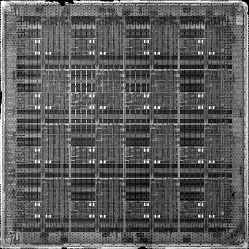
My team implemented the 16-tile Raw microprocessor, shown to the upper-left, in IBM's SA-27E 180 nm 6-layer Cu ASIC process. The 18.2 mm x 18.2 mm chip was, at least at the time, the largest design that the IBM ASIC division had targeted for SA-27E. Each tile contains computing power equivalent to a single-issue pipelined processor. A supercomputer prototype, based on 4-chip boards, that scaled to 64 Raw chips (1024-issue) was constructed.
More pictures are available here.
Technology Policy Advocacy
|
Here are my notes about Getting Interviewed as an Expert on TV, based on my experiences getting interviewed by various newspapers, radio shows, and a live TV news program about Bitcoin and the Silk Road.
Testimony regarding Massachusetts House Bill No. 2743, entitled An Act to Improve Broadband and Internet Security, at Massachusetts Joint Committee On Criminal Justice on April 2, 2003. This testimony was referenced by Ed Felton's Freedom to Tinker website and discussed in a law journal article: "Super-DMCA" Statutes: Putting Hollywood in Charge of Internet Business, Matthew A. Verga, Wake Forest Intellectual Property Law Journal 104, May 2004. |